
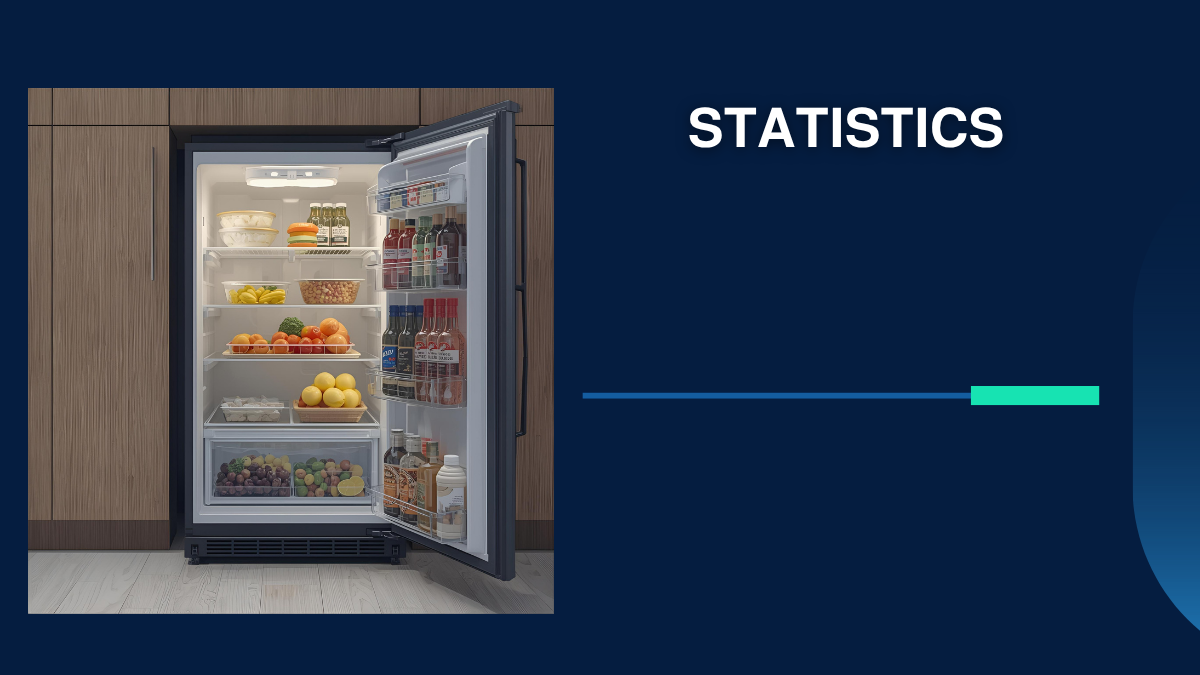
The history and invention of refrigerator is a story of human ingenuity, scientific progress, and the quest to preserve food efficiently. What we now take for granted as a simple kitchen appliance was once a groundbreaking technological achievement that transformed how people lived, ate, and thought about food storage. From early methods of keeping things cool with natural ice to the development of advanced, eco-friendly, and smart refrigerators, this journey spans centuries of innovation and discovery.
Life Before Refrigerators
Long before mechanical refrigeration, people relied on natural resources and clever methods to keep food fresh. Ancient civilizations, such as the Egyptians, Greeks, and Romans, stored food in cool cellars, underground pits, or near rivers and ice caves. In colder regions, snow and ice were collected during winter and stored in insulated structures known as icehouses for use in warmer months.
In the 18th and 19th centuries, large blocks of ice were harvested from frozen lakes and transported across continents to meet the growing demand for cold storage. Wealthier households used iceboxes—wooden cabinets lined with metal and insulated with materials like sawdust—to store perishable food. A large ice block would be placed inside, gradually melting and cooling the surrounding space. While effective to some extent, this method was labor-intensive, inefficient, and dependent on the availability of ice.
The need for a more reliable cooling method led scientists and inventors to explore artificial refrigeration systems. This marked the beginning of the scientific era in the history and invention of refrigerator.
The Science Behind Refrigeration
The concept of artificial cooling is rooted in physics—the absorption of heat during the evaporation of liquids. In the mid-18th century, Scottish physician William Cullen demonstrated this principle by evaporating ether in a vacuum, which produced a small amount of ice. Although his experiment was theoretical, it laid the groundwork for practical refrigeration systems.
In 1834, Jacob Perkins, an American inventor, built the first working vapor-compression refrigeration machine. His design used ether as a refrigerant and operated on a continuous cycle—compressing, condensing, and evaporating the liquid to absorb heat. While Perkins’ machine was not commercially successful, it was the foundation upon which all modern refrigeration technology is built.
A few decades later, inventors such as James Harrison in Australia and Carl von Linde in Germany made significant improvements. Harrison developed a commercial ice-making machine in the 1850s, while Linde introduced a safer and more efficient ammonia-based refrigeration system in the 1870s. These developments marked a major leap forward in the history and invention of refrigerator.
Refrigeration Enters the Home
By the early 20th century, refrigeration technology began to move from industrial and commercial applications—such as breweries, meatpacking plants, and ships—into private homes. The first electric household refrigerator was introduced in 1913 under the brand name Domelre (Domestic Electric Refrigerator).
In 1918, Kelvinator and Frigidaire began mass-producing electric refrigerators, which quickly gained popularity among middle-class families. These early models were simple yet revolutionary—they replaced the need for constant ice delivery and offered consistent cooling at the touch of a button.
The 1920s and 1930s saw further innovation with the introduction of Freon as a refrigerant. This non-toxic, non-flammable gas made refrigerators safer and more reliable. However, decades later, scientists discovered that Freon and similar chlorofluorocarbons (CFCs) were damaging the ozone layer, leading to environmental reforms in the 1980s.
Technological Milestones in Refrigerator Design
The history and invention of refrigerator continued to evolve rapidly through the 20th century. Each decade brought new features and improvements that reflected societal changes and technological advances.
- 1940s–1950s: Frost-free technology and automatic temperature control became standard. Refrigerators were redesigned with multiple compartments, adjustable shelves, and stylish finishes that complemented modern kitchens.
- 1960s–1970s: The focus shifted toward convenience and energy efficiency. Manufacturers introduced side-by-side door models and larger freezers to accommodate growing family needs.
- 1980s: The environmental movement led to the elimination of ozone-depleting CFCs. New refrigerants such as HFCs (hydrofluorocarbons) and improved insulation materials were adopted.
- 1990s–2000s: Digital displays, automatic ice dispensers, and humidity-controlled drawers became common. Energy-efficient designs and inverter compressors reduced power consumption.
- 2010s–Present: The rise of smart refrigerators integrated with Wi-Fi, cameras, and artificial intelligence transformed the kitchen experience. These appliances can track expiration dates, suggest recipes, and even connect to smartphones for remote monitoring.
Each innovation not only improved functionality but also reflected society’s changing needs—from basic preservation to convenience, style, and sustainability.
Impact on Society and the World
The invention of the refrigerator had a profound effect on human civilization. It revolutionized food safety, reducing the risk of bacterial contamination and spoilage. Refrigeration also enabled global trade, allowing perishable goods like dairy, meat, and seafood to be transported across vast distances.
Moreover, it transformed eating habits. People could now store leftovers, buy groceries in bulk, and enjoy seasonal fruits and vegetables year-round. The refrigerator became a symbol of modern living, representing progress, health, and comfort.
On a larger scale, refrigeration technologies played a crucial role in medicine and science, enabling the safe storage of vaccines, blood, and other temperature-sensitive materials—an achievement that continues to save millions of lives.
The Future of Refrigeration
As sustainability becomes a global priority, the future of refrigeration is focused on reducing energy consumption and environmental impact. Modern refrigerators use eco-friendly refrigerants such as R600a (isobutane) and R290 (propane), which have lower global warming potential.
Innovations such as solar-powered refrigerators, AI-driven cooling systems, and biodegradable insulation materials are also emerging. These technologies aim to make refrigeration more accessible and environmentally responsible, especially in regions with limited electricity.
The next phase in the history and invention of refrigerator will likely be defined by intelligent automation and sustainability. From smart energy management to food waste reduction, the refrigerator of the future will continue to evolve as a cornerstone of human progress.
Conclusion
The history and invention of refrigerator is more than just a tale of technological evolution—it’s a story of how science reshaped daily life. From the icehouses of ancient times to the sleek, smart appliances of today, each innovation has improved health, convenience, and quality of life. The refrigerator stands as one of humanity’s greatest achievements, a constant reminder of how necessity drives invention and how innovation can transform the world—one cool moment at a time.
Also read PartsFPS

Nice post